
Heart disease can develop quietly, sometimes years before a person notices a problem. A heart screening near Coral Springs may help eligible adults learn whether calcified plaque is visible in their coronary arteries.
At Life Imaging, we use a noncontrast CT scan to calculate a coronary calcium score. The scan is brief, usually does not require needles or sedation, and produces a report you can review with your physician.
Coral Springs residents can visit our nearbyLife Imaging Deerfield Beach center. If you have been thinking about preventive heart screening, contact us to ask about eligibility, scheduling, and current options throughThe Prevention Initiative.
Heart Screening for Coral Springs Residents
A coronary calcium scan looks for calcium within plaque along the walls of the coronary arteries. These arteries carry blood to the heart muscle. When calcium is visible, it provides evidence that coronary atherosclerosis is present.
The scan produces a number known as a coronary artery calcium score, or Agatston score. A higher score generally indicates that more calcified plaque was detected.
This information adds another piece to the heart health picture. It does not replace blood pressure readings, cholesterol testing, family history, or a physician’s evaluation. Instead, your physician can consider the score alongside those other factors when discussing your overall cardiovascular risk.
TheNational Heart, Lung, and Blood Institute provides additional information about coronary calcium scans and other tests used to evaluate heart health.
Who May Consider a Coronary Calcium Scan?
Not every adult needs preventive CT screening. The decision often makes the most sense when a person has no current symptoms but has risk factors or an uncertain level of cardiovascular risk.
You may want to discuss screening with your physician if any of the following applies to you:
- Heart disease runs in your family: A parent or sibling who developed heart disease at a relatively young age may affect your personal risk. A calcium score can provide additional information that is not available from family history alone.
- Your cholesterol or blood pressure has been elevated: These numbers are important, but they do not show whether calcified plaque has already formed. CT screening directly assesses the coronary arteries for visible calcium.
- You currently smoke or smoked in the past: Smoking can damage blood vessels and is an established risk factor for coronary heart disease. The length and intensity of tobacco exposure should be discussed with your physician.
- You have diabetes or several overlapping risk factors: Diabetes, limited physical activity, excess weight, and other health factors can influence cardiovascular risk. A physician can help decide whether calcium scoring would add useful information.
- You have received mixed or borderline results from other assessments: Sometimes age, cholesterol, blood pressure, and family history do not point in the same direction. A calcium score may help support a more informed conversation with your physician.
The presence of a risk factor does not automatically mean that you have heart disease. It simply gives you a reason to discuss whether screening is appropriate.
What Does a Heart Calcium Scan Show?
The scan shows calcified plaque within the coronary artery walls. The result is reported as a calcium score.
A Score of Zero
A score of zero means the scan did not detect calcified coronary plaque. That can be reassuring, but it does not guarantee that the arteries are completely free of disease. Noncalcified plaque may still be present, and risk can change as you get older.
A Score Above Zero
Any score above zero means some calcified plaque was detected. As the score rises, the measured amount of calcium rises as well.
The number should not be considered on its own. Age, medical history, symptoms, cholesterol, blood pressure, smoking history, and diabetes can all affect what the result means for a particular person.
What the Scan Cannot Determine
A calcium scan does not show the exact percentage of narrowing inside an artery. It also does not evaluate blood flow, heart rhythm, or the heart’s pumping function.
It is not the same test as a CT coronary angiogram, stress test, echocardiogram, or cardiac catheterization. If your physician is investigating symptoms or known heart disease, a different examination may be more useful.
What Happens During the Heart Screening?
A calcium scan is fairly straightforward. Most visits do not involve contrast material, injections, or sedation.
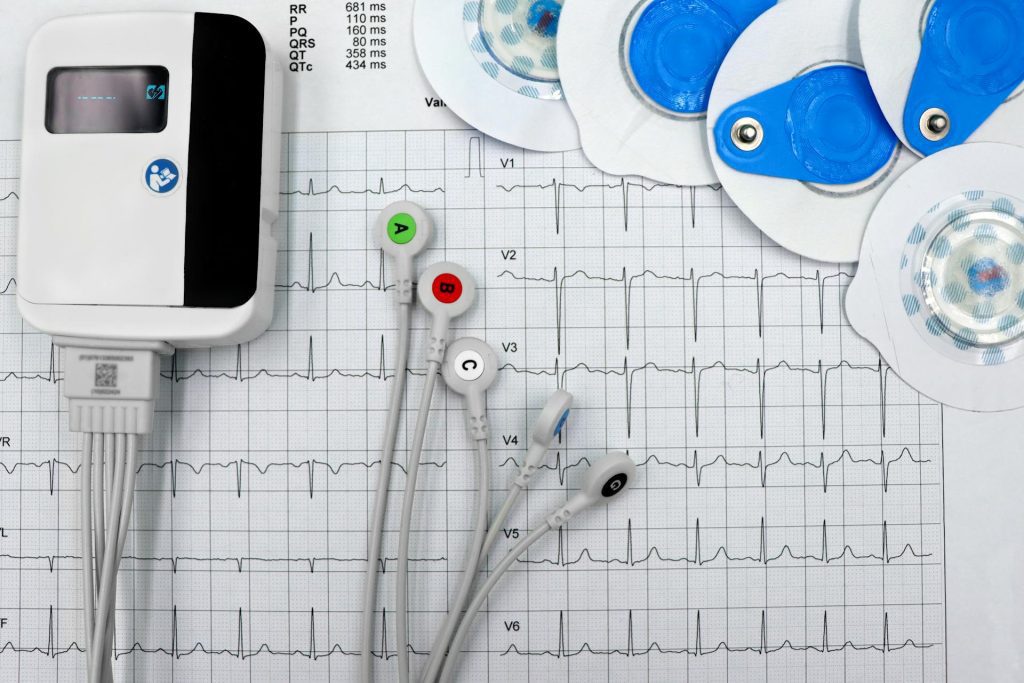
Small adhesive electrodes are placed on your chest so the CT system can coordinate the images with your heartbeat. You will lie on the scanning table and may be asked to hold your breath for a few seconds while the images are collected.
The scanning portion usually takes about 10 to 15 minutes. Time is also needed for registration and preparation so that the complete appointment will be somewhat longer.
You can usually return to normal daily activities after the scan. A licensed radiologist reviews the images and prepares a report. We encourage you to share that report with your physician, who can interpret it in the context of your complete health history.
Preparing for a Heart Scan Near Coral Springs
We will provide instructions when your appointment is scheduled. Preparation is generally simple, but following those directions can help the visit go smoothly.
Wear comfortable clothing and leave necklaces or other metal items at home when possible. You may be asked to avoid caffeine or smoking for a short period before the scan because both can affect heart rate.
Tell our team if you are pregnant, think you could be pregnant, or have recently had another CT examination. You should also mention any previous coronary calcium scan. Comparing reports may be useful, but repeat screening should be planned with your physician rather than scheduled automatically.
Heart Screening Is Not Emergency Care
Preventive heart screening is intended for people who are not experiencing urgent symptoms. It should never delay medical attention for chest pain, pressure, severe shortness of breath, fainting, sudden weakness, or discomfort spreading into the arm, jaw, shoulder, or back.
Call 911 if you believe you may be having a heart attack or another medical emergency.
People with a previous heart attack, coronary stent, bypass surgery, or diagnosed coronary artery disease should also speak with their cardiologist before arranging a calcium scan. Another type of cardiac test may be more suitable.
Understanding Radiation and Screening Limitations
A coronary calcium scan uses a small amount of CT radiation. The examination is noninvasive, but radiation exposure should still be considered before any preventive scan.
This is why screening should have a clear purpose. More frequent testing is not automatically better, and a calcium scan is not generally repeated every year.
A screening result also cannot diagnose every type of heart condition. Its value lies in identifying and measuring visible calcified plaque. Your physician can decide whether the report changes your need for follow-up, lifestyle adjustments, or additional testing.
Do not begin aspirin, supplements, or prescription medication based only on a calcium score. Treatment decisions belong with a qualified healthcare professional who knows your medical history.
Visiting Life Imaging Near Coral Springs
Our Deerfield Beach center is the most convenient Life Imaging location for many residents of Coral Springs, Parkland, Margate, Coconut Creek, and surrounding communities.
You do not need to travel to Miami or another distant part of Florida to ask about preventive heart imaging. Our team can explain the appointment process, confirm which center serves your area, and tell you what information to bring.
Life Imaging focuses on preventive screening for people who want a clearer view of certain health risks before symptoms appear. We provide the images and radiologist’s report. Your personal physician remains the right person to interpret the findings and recommend medical care.
Contact Life Imaging to ask whether coronary calcium screening may fit your preventive health plans.
Why Choose Life Imaging for Heart Screening?

People often arrive with practical questions. They want to know what the test involves, how long it takes, and what will happen after the images are taken. We keep those answers clear from the start.
At Life Imaging, you can expect:
- A focused preventive examination: The scan is designed to measure coronary artery calcium. It is not presented as a substitute for a complete heart evaluation or routine care from your physician.
- A straightforward appointment: Calcium scoring normally does not require contrast material, needles, or sedation. Our team explains the preparation and scanning process before your visit.
- Professional image review: A licensed radiologist reviews the CT images and produces a written report that you can share with your physician.
- A nearby center for Coral Springs residents: Our Deerfield Beach location serves communities across northern Broward County, making preventive screening more accessible for people living in and around Coral Springs.
- Access to our prevention program: Qualified households may be eligible for a funded baseline heart scan through The Prevention Initiative. Eligibility must be confirmed when scheduling.
Frequently Asked Questions
Our Deerfield Beach center is generally the nearest Life Imaging location for Coral Springs residents. When you contact us, our scheduling team can confirm the appropriate center based on where you live and the screening you are considering.
Referral requirements can depend on the screening program and your individual circumstances. Contact our team for the current scheduling requirements. Even when a referral is not required, we recommend discussing preventive imaging with your physician and sharing the final report.
No. A calcium scan is a noncontrast CT examination that measures calcified plaque. A coronary CT angiogram uses contrast material to create more detailed images of the coronary arteries and is generally ordered for a different clinical reason.
No. A score of 0 means no calcified coronary plaque was detected during the scan. It does not rule out noncalcified plaque or guarantee that heart disease will not develop later. Your physician should consider the result alongside your other risk factors.
Preventive screening is not appropriate for urgent or unexplained symptoms. Chest pain, pressure, severe shortness of breath, fainting, or pain spreading to the arm, jaw, back, or shoulder requires prompt medical evaluation. Call 911 when symptoms may represent an emergency.
There is no single schedule that suits everyone. The timing depends on the original score, age, risk factors, health changes, and whether another scan would affect medical decisions. Ask your physician before arranging a repeat examination.
Take a Practical Next Step for Your Heart Health
A calcium score cannot predict exactly what will happen in the future, but it may uncover information that routine measurements alone cannot provide. For an eligible adult with uncertain cardiovascular risk, that information can support a more useful conversation with a physician.
Life Imaging offers preventive heart screening for Coral Springs residents at our nearby Deerfield Beach center. We will explain the scan, answer scheduling questions, and provide a radiologist’s report for you to share with your healthcare provider.
Contact Life Imaging today to ask about a coronary calcium scan and eligibility for The Prevention Initiative.